Web Hosting Security: 6 Ways to Prevent a Hosting Nightmare in 2026
Rising cyberattacks and critical vulnerabilities highlight why hosting providers need stronger security, reliable
Press Release Disclaimer: This is a press release distributed through the XPR Media network. It has not been independently verified by our newsroom.
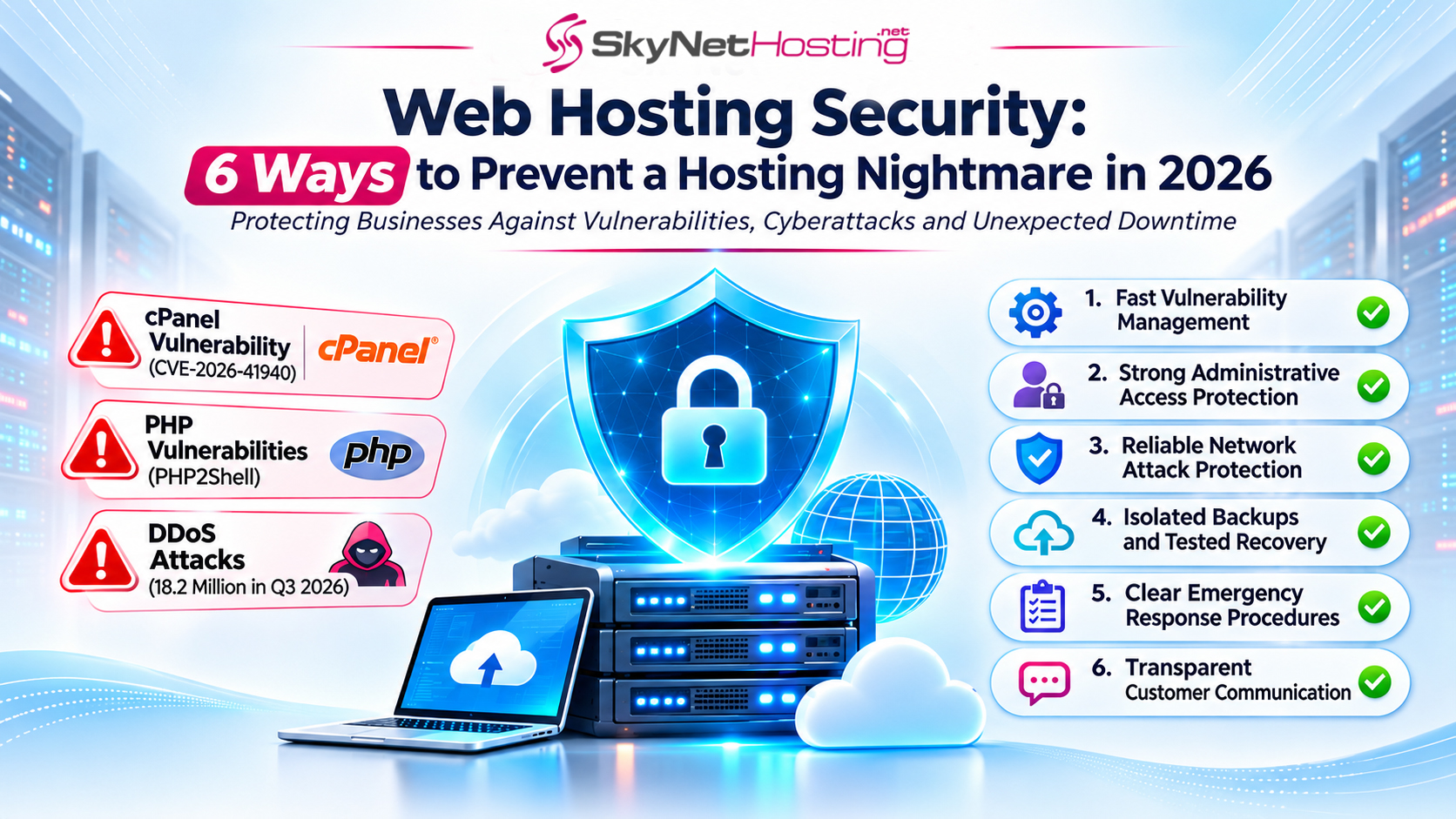

Rising cyberattacks and critical vulnerabilities highlight why hosting providers need stronger security, reliable backups and faster incident response.
WILMINGTON, DE, UNITED STATES, November 3, 2026 /EINPresswire.com/ — ->Web Hosting Security: Protecting Businesses Against Vulnerabilities, Cyberattacks and Unexpected Downtime
Web hosting security is essential for businesses that depend on websites, online stores, and digital services. Recent security incidents in 2026 have exposed weaknesses across hosting infrastructure, highlighting the importance of rapid security updates, reliable backups, and effective incident response.
A vulnerable server can put multiple websites, databases, email accounts, and customer information at risk. The consequences extend beyond temporary downtime. Businesses may face operational disruption, financial losses, reputational damage, and expensive recovery work.
For businesses choosing a hosting provider, one question matters: how prepared is that provider when a major security incident occurs?
-> 2026 Exposed Serious Weaknesses in Web Hosting Infrastructure
Three significant security developments demonstrate why infrastructure protection deserves greater attention.
1. Critical cPanel and WHM Vulnerability (CVE-2026-41940)
On April 28, 2026, cPanel released security updates addressing a critical authentication bypass vulnerability. The flaw could allow unauthenticated attackers to gain unauthorized access to affected control panels.
The vulnerability affected cPanel versions after 11.40. CISA subsequently added it to its Known Exploited Vulnerabilities catalogue. cPanel reported that updates became available approximately 28 hours after confirmation. By May 10, over 98% of servers worldwide were running updated versions.
2. Critical PHP Vulnerabilities (PHP2Shell)
In October 2026, two serious PHP vulnerabilities emerged: CVE-2026-109618 and CVE-2026-109619.
Both received CVSS 9.2 severity scores. Successful exploitation could allow unauthenticated attackers to execute remote code.
W3Techs reported that PHP powered 69.1% of websites with a known server-side programming language on November 2, 2026. This demonstrates the potential reach of vulnerabilities affecting widely deployed technologies.
3. Increasing DDoS Attacks
Cloudflare’s Q3 2026 DDoS report recorded 18.2 million network-layer DDoS attacks.
That represents approximately 8,200 attacks every hour. Short-burst attacks increased by 208% compared with Q3 2025.
These figures demonstrate why network protection must remain a continuous responsibility.
—>Six Ways to Prevent a Web Hosting Nightmare
Security requires more than installing software updates. Hosting providers need a structured approach covering six essential areas.
1. Fast Vulnerability Management
Providers must monitor security advisories from software vendors. Critical vulnerabilities require immediate assessment and prioritised patching.
Updates should undergo appropriate testing. Unsupported software must also be identified and replaced.
2. Strong Administrative Access Protection
Server management interfaces require strict access controls.
Multi-factor authentication (MFA), restricted administrative permissions, secure credentials, and regular access reviews help reduce unauthorized access risks.
3. Reliable Network Attack Protection
DDoS protection should monitor incoming traffic continuously. Traffic filtering and network-level mitigation can help prevent malicious traffic from overwhelming hosting infrastructure.
4. Isolated Backups and Tested Recovery
Backups should remain separate from production infrastructure. This reduces the risk of losing both live data and recovery copies during an incident.
Providers should regularly test restoration procedures. A backup is valuable only when its data can be recovered successfully.
5. Clear Emergency Response Procedures
Technical teams need documented procedures for detecting, containing, and resolving security incidents.
Recovery plans should identify responsibilities, escalation procedures, alternative infrastructure, and restoration priorities.
6. Transparent Customer Communication
Customers need accurate information during disruptions.
Providers should explain what happened, which services are affected, what actions are underway, and when further updates will be available.
Clear communication helps businesses make informed operational decisions.
—> Questions Businesses Should Ask Their Hosting Provider
Website security is a shared responsibility. Website owners must maintain applications, plugins, and passwords. Hosting providers must protect their underlying infrastructure.
Before choosing a hosting partner, businesses should ask:
– How quickly are critical security vulnerabilities addressed?
– Is administrative access protected by MFA?
– Are backups stored separately from production servers?
– How frequently are recovery procedures tested?
– What happens when a major infrastructure incident occurs?
– How are customers informed during service disruptions?
The answers can reveal more about operational reliability than promotional claims alone.
–> Building a More Resilient Hosting Environment
For SkyNetHosting.Net.Inc, the security developments of 2026 reinforce an important principle: hosting security is an ongoing operational responsibility.
“Businesses depend on their websites every day, but the technology behind those websites continues to evolve,” said Sagara Kaleniya Founder and CEO of SkyNetHosting.Net.Inc.
“Hosting providers must focus on complete operational resilience. This includes rapid security updates, reliable backups, effective network protection, and honest communication. Protecting customer data and maintaining trust must remain priorities.”
At SkyNetHosting.Net.Inc, our Corporate Reseller Plan goes beyond offering value added features such as free WHMCS, MailChannels, SSL certificates, and a comprehensive range of hosting tools. That is why security is equally central to the plan, with multiple layers of protection designed to strengthen server infrastructure, safeguard hosted websites, and give resellers greater confidence in the security and resilience of their hosting environment.
—> Preparing for the Next Security Challenge
No hosting provider can guarantee that cyberattacks or service disruptions will never occur.
However, preparation determines how quickly threats are identified, how effectively incidents are contained, and how reliably services are restored.
The next major vulnerability could affect an unexpected component of hosting infrastructure. Businesses should therefore evaluate their hosting providers beyond pricing and advertised resources.
Ultimately, reliable web hosting is not simply about keeping websites online. It is about protecting the infrastructure, data, and business operations customers depend on.
Bob Thomas
SkyNetHosting.Net Inc
bob@skynethosting.net
Visit us on social media:
LinkedIn
Instagram
Facebook
YouTube
X
Legal Disclaimer:
EIN Presswire provides this news content “as is” without warranty of any kind. We do not accept any responsibility or liability
for the accuracy, content, images, videos, licenses, completeness, legality, or reliability of the information contained in this
article. If you have any complaints or copyright issues related to this article, kindly contact the author above.

Media gallery