
New XCath Documentary Goes Behind the Scenes of World-first Robotic Stroke Procedure
Released for World Stroke Day, Operation Robo Angel goes behind the scenes of the medical breakthrough and the people
Press Release Disclaimer: This is a press release distributed through the XPR Media network. It has not been independently verified by our newsroom.


XCath, a medical device company advancing neuro-endovascular surgical robotics, today releases ‘Operation Robo Angel: Chapter One’, a documentary telling the inside story of the world’s first remote robotic mechanical thrombectomy on a living patient. The documentary – unveiled to coincide with World Stroke Day – is available to watch for free online. It was produced by Lucky 13 Films.
This press release features multimedia. View the full release here: https://www.businesswire.com/news/home/20261029024461/en/
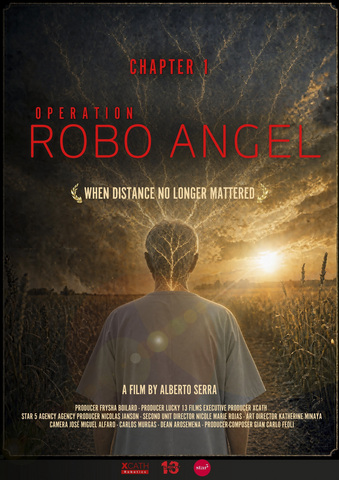
‘Operation Robo Angel: Chapter One’, released by XCath, tells the inside story of the world’s first remote robotic mechanical thrombectomy on a living patient
Eduardo Fonseca, CEO of XCath, said: “Operation Robo Angel tells the story of what can happen when an exceptional team comes together around a shared humanitarian goal. Behind this world-first procedure were doctors, clinical teams and engineers working together under extraordinary pressure, driven by a deeply personal commitment to patients. We hope the documentary not only raises awareness of stroke symptoms but also shows how technology could help bring specialist expertise to people who might otherwise be unable to access it.”
Earlier this year in Panama, renowned neurointerventional surgeon Dr Vitor Mendes Pereira used XCath’s early Iris Surgical Robotic System to remove a blood clot from a stroke patient’s brain from more than 200 kilometres away. The clot was successfully removed on the first pass, restoring blood flow to the brain. The patient has since made a full recovery.
Through first-hand accounts from the doctors, engineers and other specialists involved, alongside the patient and his family, ‘Operation Robo Angel: Chapter One’ reveals the race against time behind the procedure. The film explores how doctors whose own lives have been touched by stroke and loss have channelled those experiences into a commitment to saving others. It also tells the story of a family that came close to tragedy and the second chance made possible by the team’s efforts.
The documentary is the first in a new series following XCath’s efforts to expand access to specialist stroke treatment through robotic technology. Its release for World Stroke Day also aims to raise awareness of stroke symptoms and the importance of seeking emergency medical attention immediately.
Stroke is one of the leading causes of death and disability globally, with the lifetime risk increasing 50% in the last 20 years. Currently, it is estimated that one in four adults will experience a stroke during their lifetime. Every year, more than five million people die from stroke, while another five million are left with severe disability.
Mechanical thrombectomy is widely regarded as the gold standard treatment for patients suffering a large vessel occlusion (LVO) stroke – the deadliest and most disabling type of ischemic stroke. However, access to the procedure remains unequal. According to the American Heart Association, the global median rate of access to mechanical thrombectomy is just 2.79%, meaning the overwhelming majority of eligible patients never receive the procedure.
The Iris System is being developed with the potential to enable specialist surgeons to treat patients remotely, helping overcome geographical barriers to care. While the technology remains under development, the procedure documented in Operation Robo Angel marks a significant milestone in efforts to expand access to specialist stroke treatment.
Following the procedure earlier this year, XCath has achieved regulatory milestones for its future Iris Surgical Robotic System. In September 2026, the system received Breakthrough Device Designation from the U.S. Food and Drug Administration (FDA) and was subsequently accepted into the FDA’s Total Product Life Cycle Advisory Program (TAP) Pilot. These developments provide XCath with enhanced access to FDA guidance and ongoing regulatory engagement as the company advances its mission to make remote robotic stroke treatment more widely accessible.
Recognising the signs of stroke
Stroke is a medical emergency. Recognising the warning signs and seeking immediate medical attention can help save lives and reduce the risk of lasting disability.
Remember FAST:
- Face: Has one side of the face drooped?
- Arms: Is the person unable to raise both arms?
- Speech: Is their speech slurred or difficult to understand?
- Time: Call emergency services immediately if any of these signs are present.
About XCath
Founded in 2017, XCath is a dynamic startup and the industry leader in the mission to improve neurovascular care through robotic capabilities. XCath’s Iris System is the only endovascular robotic system currently in development to have achieved remote robotic intracranial navigation and neurointerventional procedures. With strategically located campuses in Houston, Texas – home to the world’s largest medical center – and Pangyo, South Korea, often referred to as the Silicon Valley of Korea, XCath is committed to bringing its innovative solutions to patients around the world. XCath’s Iris System is the only endovascular robotic system in development to achieve local or telerobotic neurointerventional treatment and is also the world’s only triaxial neurovascular robot to perform treatment.
The XCath Iris endovascular surgical robotic system is currently under development. It is not yet cleared for commercial distribution in any country.
View source version on businesswire.com: https://www.businesswire.com/news/home/20261029024461/en/
Media gallery
