Toxic Mushroom Poisons Playful Pooch
MINNEAPOLIS, Oct. 14, 2026
Press Release Disclaimer: This is a press release distributed through the XPR Media network. It has not been independently verified by our newsroom.

Toxic Mushroom Poisons Playful Pooch
PR Newswire
MINNEAPOLIS, Oct. 14, 2026
Some Backyard Fungi Can Be Deadly
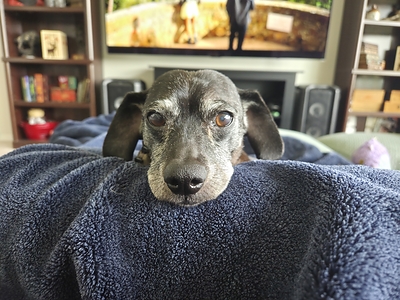
MINNEAPOLIS, Oct. 14, 2026 /PRNewswire/ — While walking in field grass near their house, Taylor Sisson’s dog Sammy came across some wild mushrooms. Being a dog, she decided to chow down.
“I didn’t notice her eating anything,” explained Sisson. “When I realized she had a mushroom, I took it out of her mouth, but she had already eaten most of it. I threw what was left in the forest and didn’t think much more about it and went home.”
A few hours later Sammy began panting and behaving strangely.
“When I took her back outside, she fell over,” Sisson said. “She couldn’t walk and she was acting like she was drunk. She kept falling over. My mind remembered that she had eaten part of a mushroom, so I went and looked in the area but couldn’t find anything.”
Sisson called her regular veterinarian, who recommended Sammy needed an emergency veterinarian and suggested she call Pet Poison Helpline. They recommended she seek treatment for Sammy immediately.
“The person from Pet Poison Helpline told me to just get in the car, and she would do everything on her end,” Sisson recalled. “As I was driving, I was hysterical. She was keeping me calm and even helped me find an emergency hospital in my area. She also told me to be prepared for Sammy to start having seizures.”
The toxicology experts at Pet Poison Helpline were able to assist in identifying the mushroom as an Amanita pantherina. The majority of confirmed fatal mushroom poisonings in pets are due to mushrooms from the Amanita, Galerina, and Lepiota genera.
“Although some mushrooms may be edible, it is better to assume they are all poisonous to our pets since they are often difficult to identify,” suggested Dr. Renee Schmid, a senior veterinary toxicologist and director of Veterinary Medicine at Pet Poison Helpline. “Clinical signs of mushroom poisoning may include vomiting, diarrhea, salivation, abdominal pain, hallucinations, tremors and seizures. In some cases, ingestion can lead to liver failure, kidney failure and death.”
By the time Sammy arrived at the Emergency Veterinary Hospital of Coeur d’ Alene in Coeur d’ Alene, Idaho, she was ataxic (lack of coordination), lethargic, and was experiencing hallucinations and tremors. The heroic medical team placed Sammy on intravenous fluids, administered an antiemetic and provided medication for tremors. Additional guidance was provided including bloodwork monitoring and treatments based on additional clinical signs that may appear.
“It was amazing when we got there,” Sisson said. “They had five people rush to help me. I couldn’t answer some of the questions. I had just lost my oldest dog who was 17, and they had spent their whole lives together, so I was very emotional.”
With the diligent work of the veterinarians and nursing staff at Emergency Veterinary Hospital of Coeur d’ Alene, Sammy was successfully treated and was able to return home the next day. Left untreated, Sammy’s neurologic signs would have likely worsened and caused additional life-threatening abnormalities.
“Between Pet Poison Helpline and the amazing medical team at the hospital, they saved her life,” Sisson added.
Unfortunately, that happy ending was short-lived. A few months after surviving her mushroom adventure, Sammy was diagnosed with cancer and passed away.
“Pet Poison Helpline gave us two extra months with Sammy, which we treasured,” Sisson shared. “I had no idea they were around, and I’ve told everyone about them. I wanted to share Sammy’s story even though we lost her to cancer shortly after, because people need to know this resource exists.”
Pet Poison Helpline created Toxin Tails to educate the veterinary community and pet lovers on the many types of poisoning dangers facing pets, both in and out of the home. All the pets highlighted in Toxin Tails have been successfully treated for the poisoning and fully recovered.
Don’t Miss Future Content
The Toxin Tails campaign will be sunsetting at the end of 2026. Pet lovers and professionals who would like to join us on our new lifesaving campaign and continue receiving similar content directly can sign up here.
About Pet Poison Helpline
Pet Poison Helpline®, your trusted source for toxicology and pet health advice in times of potential emergency, is available 24 hours, seven days a week for pet owners and veterinary professionals who require assistance treating a potentially poisoned pet. Per incident and subscription service options are available. We are an independent, nationally recognized animal poison control center triple licensed by the Boards of Veterinary Medicine, Medicine and Pharmacy providing unmatched professional leadership and expertise. Our veterinarians and board-certified toxicologists provide treatment advice for all species, including dogs, cats, birds, small mammals, large animals and exotic species. As the most cost-effective option for animal poison control care, Pet Poison Helpline’s fee of $89 per incident includes follow-up consultations for the duration of the case. The company also offers pethelpline(SM) and pethelplinePRO(SM) subscription services directly to pet lovers. Based in Minneapolis, Pet Poison Helpline is available in North America by calling 800-213-6680. Additional information, including a chat feature for pet owners, can be found online at www.petpoisonhelpline.com.
Contact: Curtis Steinhoff
Pet Poison Helpline®
(602) 300-8466
csteinhoff@petpoisonhelpline.com
 View original content to download multimedia:https://www.prnewswire.com/news-releases/toxic-mushroom-poisons-playful-pooch-302907664.html
SOURCE Pet Poison Helpline